Dining · 11 min
Rooftops of Rome
The four rooftop restaurants attached to the hotels in this guide, compared on price, view and booking difficulty.
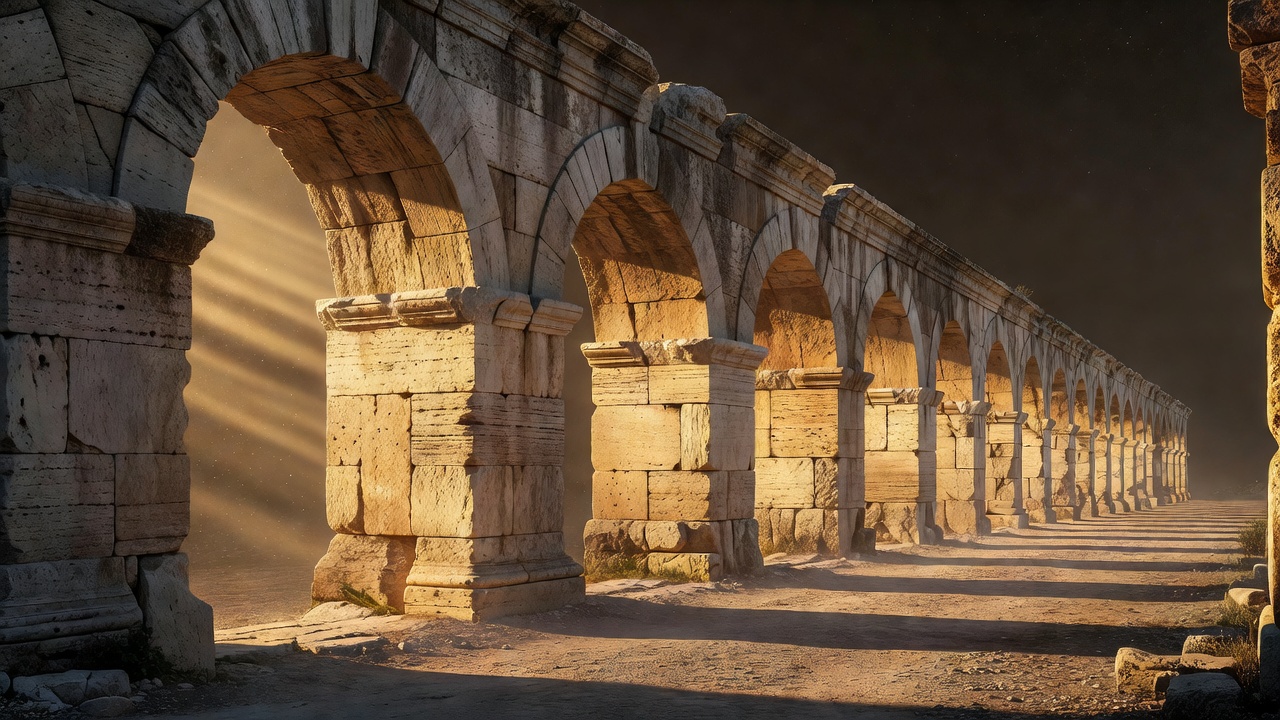
Two thousand years after Roman engineers made it routine, the semicircular arch remains the one detail that tells your eye where it is standing.
Walk from Piazza Venezia to the Colosseum and count the arches. You will lose track somewhere around the Forum. They are in the aqueducts, the basilicas, the triumphal monuments, the vaulted substructures of buildings that no longer have upper storeys. They are also in the doorway of the pharmacy on Via dei Serpenti, in the portico of a 1930s apartment block in Prati, and — this is the point of this essay — in the lobby of nearly every hotel in this city that wants to be taken seriously.
The arch was not a Roman invention. Mesopotamian and Etruscan builders used it centuries earlier. What Rome did was industrialise it. By pairing the semicircular arch with hydraulic concrete — opus caementicium, made with volcanic pozzolana from the Bay of Naples — Roman engineers could span distances that post-and-lintel construction simply could not reach, and they could do it with unskilled labour, repeatable formwork and cheap rubble fill.
The structural logic is elegant. A lintel spanning two columns works in bending: the underside stretches, the top compresses, and stone is very poor in tension. An arch converts that bending into pure compression, pushing load sideways and down through the voussoirs into the piers. Stone is extraordinarily good in compression. The arch therefore lets you build wider, higher and with less material.
The Greeks built to be looked at. The Romans built to be walked through. The arch is the difference.
Once the Romans had the arch, they began to use it decoratively even where it carried nothing. The Colosseum's exterior is the clearest case: eighty ground-floor arcades, each framed by engaged columns and an entablature borrowed straight from Greek temple architecture. The columns do almost no structural work. They are there to give the arch a grammar — to make it legible as architecture rather than as engineering.
That separation of structure from expression is what makes the arch so portable. It survives the fall of the empire, returns with Brunelleschi and Alberti in the fifteenth century, is codified by Palladio in the sixteenth, industrialised in cast iron in the nineteenth, and re-emerges, softened and abstracted, in the interiors of the 2020s.
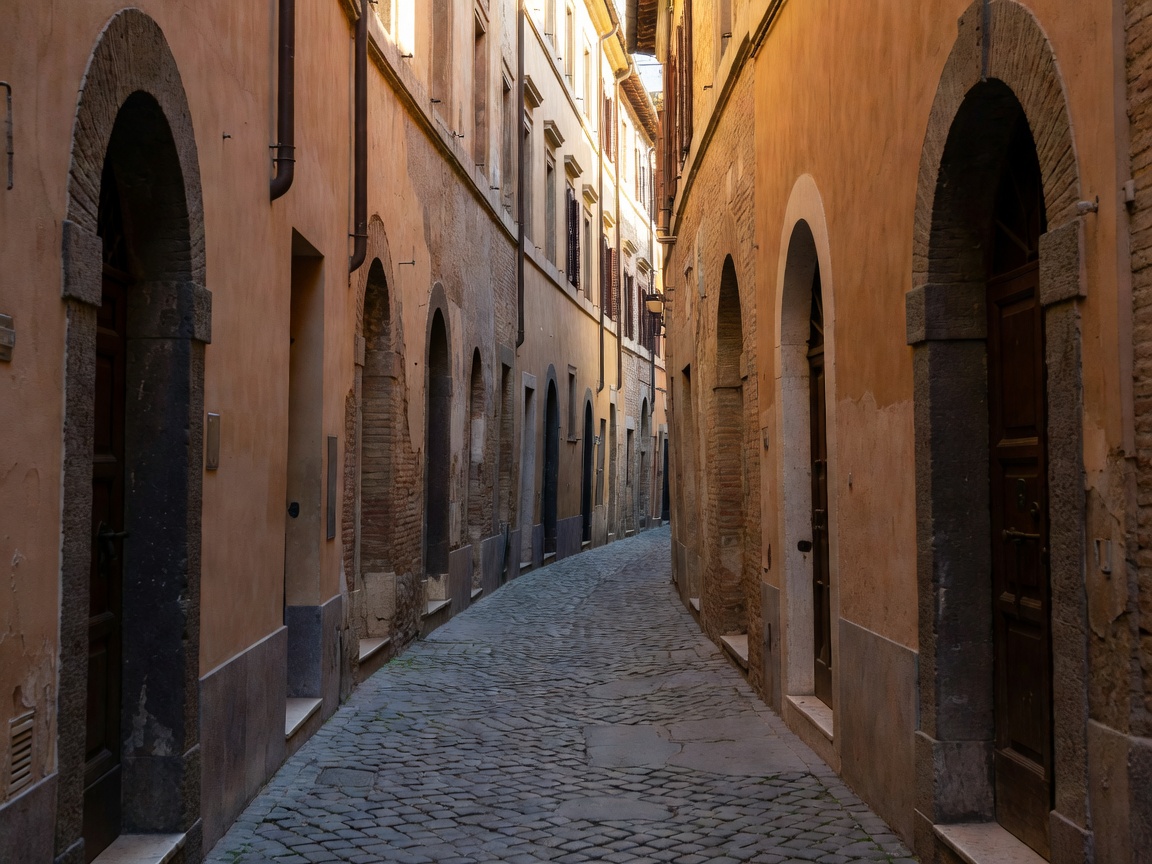
Patricia Urquiola's team used arches structurally and graphically throughout Palazzo Salviati Cesi Mellini. Real vaults survive in the lower floors and were exposed rather than plastered over; upstairs, arches are drawn onto walls in relief, in lime plaster, as flat outlines around headboards and mirrors. The move is honest: it acknowledges that the upper interior is new, and borrows the shape as a rhythm rather than faking a structure. The spa below ground is where it reads most powerfully — a barrel-vaulted bathing sequence lit almost entirely from below. Read our review.
Here the arch is not in the hotel; it is outside the window. Every Colosseum-facing room frames eighty arcades across the road, and the interior wisely does almost nothing to compete. Dark timber, bronze, plain plaster, a plain window reveal. The design decision is restraint. Read our review.
Valadier's terraced garden uses arched niches, grottoes and arcaded retaining walls to stitch the hillside together. The hotel's ground-floor loggia repeats the curve, so that moving from courtyard to garden feels like passing through a series of frames rather than a single doorway. Read our review.
Interesting by omission. Bruno Moinard's restoration favours rectilinear panelling, straight cornices and clean reveals; the arch appears mostly in the arched windows of the original 1889 façade. The effect is deliberately more Parisian than Roman, which is part of the Eden's distinctive character. Read our review.
At the Hassler the arches are simply there, unreconstructed, in the vaulted service corridors, in door surrounds, in the shape of the Palm Court. Nobody designed them as a statement. They came with the building. That unselfconsciousness is exactly what the other four are trying, in different ways, to reproduce. Read our review.
The Arch of Constantine (315 AD, beside the Colosseum), the Arch of Septimius Severus in the Forum, the surviving arcades of the Ludus Magnus on Via Labicana, the aqueduct piers in the Parco degli Acquedotti, and — least visited, most extraordinary — the vaults of the Basilica of Maxentius. All are visible from public ground without a ticket.
See where to stay nearbyThe reason the arch persists is not nostalgia. It is that a curve carrying compression is a genuinely optimal solution to a genuinely permanent problem, and the eye, over two millennia, has learned to read it as stability. Put one in a hotel lobby and the room feels older, calmer and more grounded than its construction date deserves. That is not decoration. That is engineering, working on you sideways.
Practical follow-ups to this essay.
The four rooftop restaurants attached to the hotels in this guide, compared on price, view and booking difficulty.
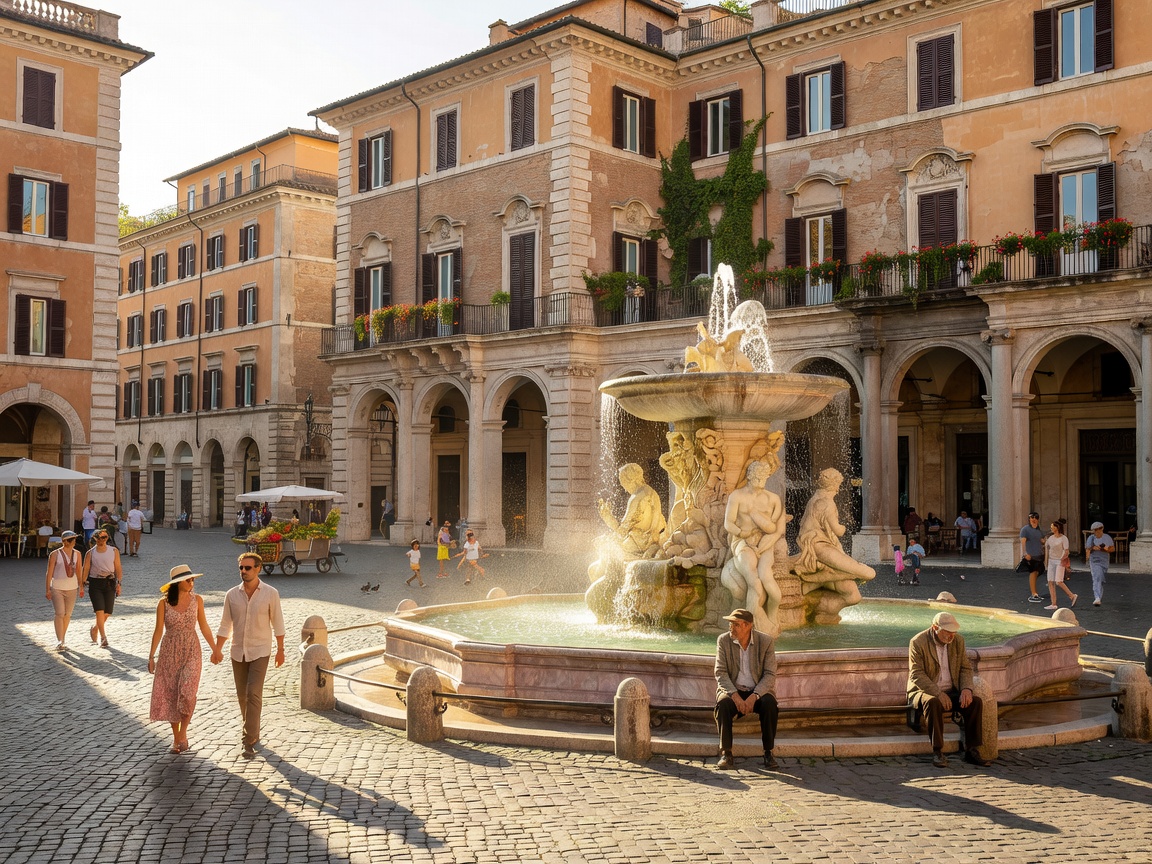
Six quarters assessed on noise, walkability and evening atmosphere — and which hotel sits in each.